The UAE’s Wealth Surge: How the Emirates Became a Global Economic Powerhouse
In 2023, the UAE’s net worth stood as a testament to its relentless economic evolution—a nation that transformed from a desert trading post into a financial and logistical hub within decades. With a GDP exceeding $450 billion and assets spanning sovereign wealth funds, luxury real estate, and cutting-edge infrastructure, the UAE’s financial landscape has redefined prosperity in the Middle East. But what drives this wealth? And how does the UAE net worth 2023 compare to its regional peers?
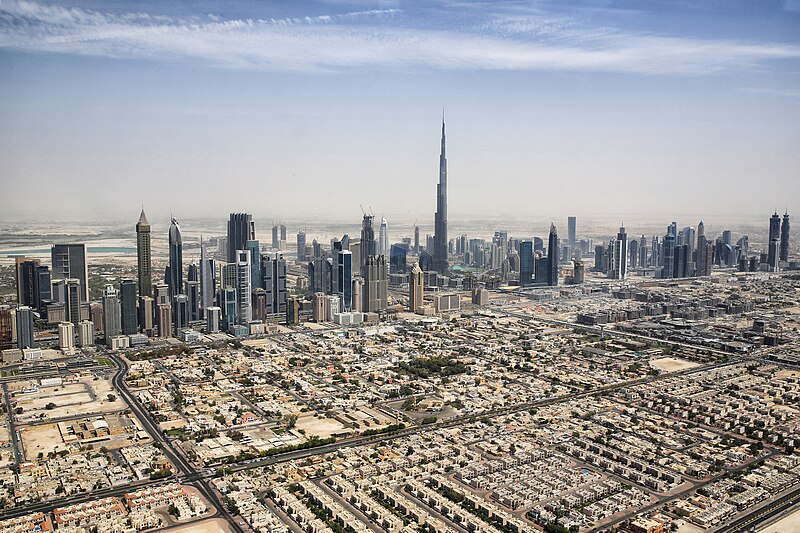
The numbers tell a story of strategic diversification. While oil remains a cornerstone, non-oil sectors—from fintech to tourism—now account for over 60% of GDP. Dubai’s skyline, Abu Dhabi’s sovereign wealth, and Sharjah’s cultural investments collectively contribute to a $1.6 trillion total asset base, according to the latest reports. Yet, beneath the gleaming skyscrapers and record-breaking megaprojects lies a complex interplay of fiscal policies, global trade dynamics, and technological innovation.
As we dissect the UAE net worth 2023, we uncover not just financial metrics but a blueprint for resilience. How did the Emirates weather global crises while others faltered? And what does the future hold for a nation where wealth isn’t just measured in dollars, but in influence?
The Complete Overview
Historical Background and Evolution
The UAE’s journey from a
$1.5 billion GDP in 1971 to today’s economic titan is a study in deliberate transformation. The discovery of oil in the 1950s provided the initial capital, but it was the
1990s and 2000s that saw the real shift—diversifying beyond hydrocarbons.
- 1990s: Dubai’s free zones (e.g., Jebel Ali) attracted global businesses, reducing reliance on oil.
- 2000s: The real estate boom (Burj Khalifa, Palm Islands) and financial deregulation (DIFC) cemented Dubai’s status as a global city.
- 2010s: Abu Dhabi’s sovereign wealth fund (ADIA) became one of the world’s top investors, while Expo 2020 (postponed to 2021) reinforced the UAE’s soft power.
By
2023, the
UAE net worth is a product of these layers—oil revenues (still ~30% of GDP), but increasingly driven by
tourism (15% of GDP), trade (40% of GDP), and digital economies.
Core Mechanisms: How It Works
The UAE’s wealth engine operates on three pillars:
- Sovereign Wealth Funds (SWFs):
-
ADIA (Abu Dhabi Investment Authority) manages
$1.4 trillion—one of the largest in the world.
-
ICP (Investment Corporation of Dubai) focuses on global real estate and infrastructure.
- These funds act as
rainy-day reserves, insulating the economy from volatility.
- Free Zones & Tax Policies:
-
0% corporate tax in designated zones (DIFC, DMCC) attracts multinational corporations.
-
100% foreign ownership in free zones eliminates local sponsorship hurdles.
- Strategic Trade & Logistics:
-
Jebel Ali Port (world’s 6th busiest) and
Dubai International Airport (largest globally) position the UAE as a
trade crossroads.
- The
UAE’s trade surplus in 2023 exceeded
$150 billion, driven by re-exports and services.
Key Benefits and Impact
"The UAE didn’t just build skyscrapers—it built a financial ecosystem where capital flows faster than anywhere else in the region." — IMF Regional Economic Outlook 2023
Major Advantages
The
UAE net worth 2023 isn’t just about numbers—it’s about
economic agility. Here’s why it stands out:
- Resilience Against Global Shocks:
- While other oil-dependent nations struggled with
2020’s oil crash, the UAE’s
non-oil GDP grew by 5% in 2023, per
World Bank data.
-
Diversification buffers against commodity price swings.
- Attracting Elite Capital:
-
Goldman Sachs, HSBC, and JPMorgan have expanded regional HQs in Dubai, boosting financial services to
$20 billion annually.
-
Visa reforms (2023) allowed 100% foreign ownership in mainland companies, further easing business entry.
- Luxury & High-Net-Worth Migration:
- The UAE hosts
30% of the Middle East’s billionaires, with
Dubai’s property market valued at
$300 billion.
-
Expat wealth (from India, Pakistan, and Europe) fuels consumption, with
$120 billion spent annually on retail and services.
- Tech & Innovation Leadership:
-
AI and blockchain initiatives (e.g.,
Dubai’s "Smart City" project) position the UAE as a
future-ready economy.
-
Neom’s $500 billion futuristic city (The Line) symbolizes long-term vision.
- The UAE’s
neutral stance in global conflicts (e.g., mediating between Saudi and Iran) enhances trade security.
-
Abraaj Capital’s $1 billion Africa fund shows strategic soft-power investments.
Comparative Analysis
| Metric | UAE (2023) | Saudi Arabia (2023) | Qatar (2023) | Global Avg. |
|---|
| GDP (Nominal) | $450B | $900B | $220B | $1.7T (USA) |
| GDP per Capita | $120K | $28K | $100K | $12K (Global) |
| Non-Oil GDP % | 62% | 45% | 70% | Varies (30-50%) |
| Sovereign Wealth | $1.6T (ADIA + ICP) | $600B (PIF) | $400B (QIA) | $9T (Global SWFs) |
While Saudi Arabia has a
larger GDP, the UAE’s
per capita wealth and non-oil dependency make it more resilient. Qatar, though smaller, has a
higher non-oil GDP share, but lacks the UAE’s
diversified business ecosystem.
Future Trends
The UAE net worth 2023 is just a snapshot. By 2030, projections suggest:
- AI & Automation Boom:
- Dubai aims for
75% automation in government services by 2030, reducing labor costs by
20%.
- Renewable Energy Dominance:
-
Masdar City (Abu Dhabi) and
Dubai’s solar projects could make the UAE a
net energy exporter by 2040.
- Space & Blue Economy:
-
MBRSC (Mars missions) and
Neom’s ocean projects will diversify into
space tech and deep-sea mining.
- Tourism 2.0:
-
Expo City Dubai (post-2020) will host
100M visitors annually, with
VR tourism becoming mainstream.
- Regional Financial Hub:
-
Dubai’s stock exchange (ADX) may surpass
Nasdaq in Middle East listings by 2025.
Conclusion
The UAE net worth 2023 is more than a financial statistic—it’s a masterclass in economic reinvention. From oil-dependent beginnings to a $1.6 trillion asset base, the Emirates have proven that wealth isn’t static. It’s built on strategic foresight, global integration, and relentless innovation.
As the world watches Neom’s futuristic cities and Dubai’s skyline, one thing is clear: the UAE isn’t just keeping up with the future—it’s defining it. For investors, expats, and policymakers, understanding the UAE net worth 2023 is understanding the blueprint for 21st-century prosperity.
Comprehensive FAQs
Q: How does the UAE’s net worth compare to other Gulf nations?
A: The UAE leads in
per capita wealth ($120K) and
non-oil GDP (62%), while Saudi Arabia has a
larger GDP ($900B) but remains oil-dependent. Qatar’s
higher non-oil share (70%) reflects its gas-driven economy, but the UAE’s
diversified business ecosystem gives it an edge in long-term stability.
Q: What’s the biggest contributor to the UAE’s net worth in 2023?
A:
Trade and re-exports (40% of GDP) and
financial services (15%) are the top drivers, followed by
tourism (12%) and
real estate (10%). Oil contributes
~30%, but its share is declining.
Q: Are there risks to the UAE’s economic growth?
A: Yes—
over-reliance on expat labor (90% of workforce),
geopolitical tensions in the region, and
climate vulnerability (desalination costs) pose challenges. However,
SWFs and diversification mitigate these risks.
Q: How does Dubai’s wealth differ from Abu Dhabi’s?
A:
Dubai thrives on
trade, tourism, and real estate (luxury markets, free zones), while
Abu Dhabi is powered by
oil revenues and sovereign wealth (ADIA). Dubai’s economy is
more volatile but faster-growing; Abu Dhabi’s is
stabilized by long-term investments.
Q: Can foreign investors fully own a business in the UAE?
A:
Yes, but with conditions. Since
2023,
100% foreign ownership is allowed in
mainland companies (previously restricted to free zones). However,
certain sectors (e.g., oil, defense) still require local partnerships.
Q: What’s the outlook for UAE real estate in 2024?
A:
Stable but selective growth. Post-pandemic demand for
luxury villas and off-plan properties remains strong, but
oversupply in some areas (e.g., Dubai Marina) may cap price surges.
Rental yields (6-8%) and
investor visas keep demand high.